
How to Start Vermicomposting Business
Learn how to start and grow a profitable vermicomposting business by turning organic waste into valuable compost. This course covers step-by-step processes, setup, management, and marketing strategies to help you build a sustainable income source.
-
 Skill Pathshala Team
 - 55 enrolled students
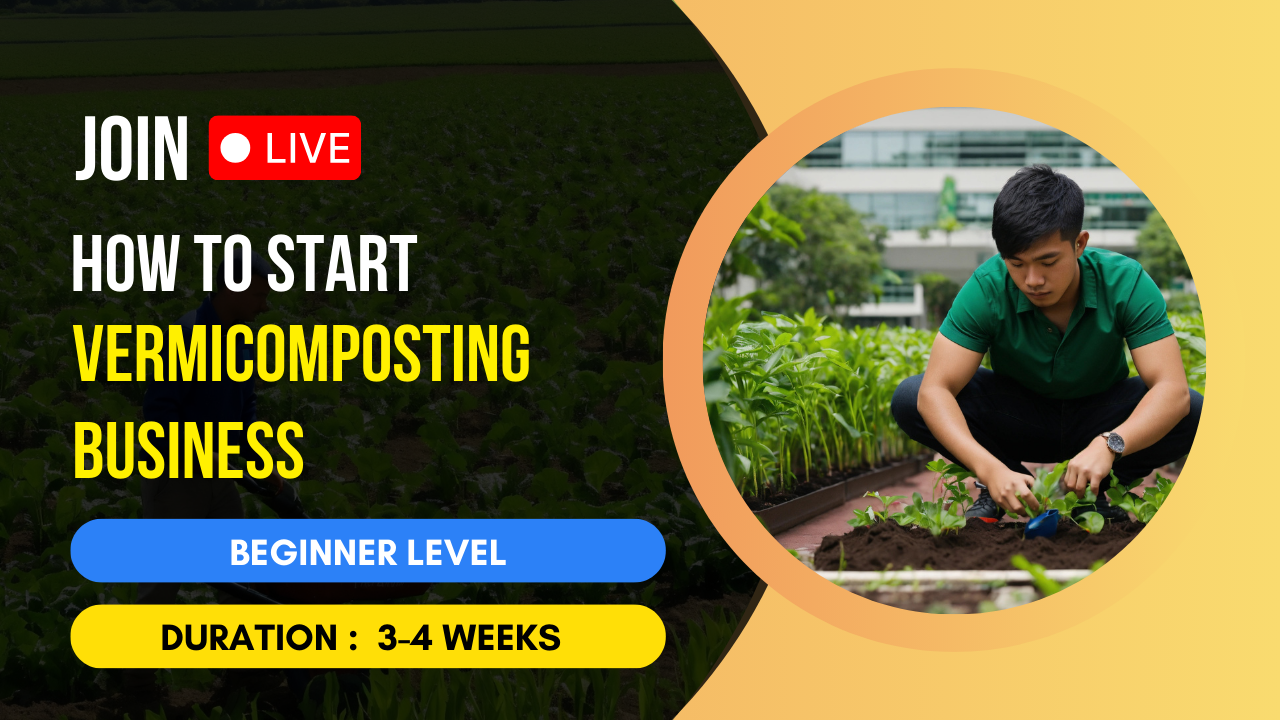
Course Description
"How to Start Vermicomposting Business" is a complete guide for anyone who wants to step into eco-friendly entrepreneurship. Vermicomposting not only helps in waste management but also creates a high-demand organic product used in farming, gardening, and nurseries.
What you'll learn in this course
-
The fundamentals of vermicomposting and its benefits.
-
Step-by-step process to set up a vermicomposting unit at home or commercially.
-
Types of earthworms used and their care.
-
Waste management techniques and compost production cycles.
-
Cost analysis, investment requirements, and profitability insights.
-
Branding, packaging, and marketing strategies for vermicompost.
-
How to connect with farmers, nurseries, and organic markets.
-
Government schemes, subsidies, and support available for vermicomposting businesses.
Requirements
-
No prior experience in farming or business required.
-
Interest in sustainable farming, organic products, or entrepreneurship.
-
Basic understanding of waste segregation is helpful but not mandatory.
-
Willingness to invest time and effort into hands-on practice.
Curriculum
- 10 Lessons
- 120 mins.
- Understanding the concept and benefits of vermicomposting
- Importance of earthworms in organic waste management
- Difference between traditional composting and vermicomposting
- Scope and opportunities of vermicomposting as a business
- Types of earthworms used in vermicomposting
- Biology, feeding habits, and lifecycle of composting worms
- Maintaining healthy worm populations
- Common problems affecting worms and how to prevent them
- Feeding techniques and frequency for earthworms
- Moisture, temperature, and pH balance in vermi-beds
- Waste segregation and preparation before feeding
- Monitoring and troubleshooting common issues in the process
- Harvesting and Processing Vermicompost Identifying the right time to harvest vermicompost
- Methods of separating worms from compost
- Drying, sieving, and packaging of finished vermicompost
- Quality standards and testing of vermicompost
- Vermicompost Products and By-Products Types of vermicompost products (solid compost, vermiwash, worm biomass)
- Collection and use of vermiwash as liquid fertilizer
- Multiplying earthworms for sale as livestock
- Value addition in vermicompost products
- Business Planning and Setup Estimating investment, cost, and profit margins
- Selecting business model: small-scale vs. commercial unit
- Infrastructure, tools, and resources required
- Building a step-by-step business plan
- Marketing and Sales Strategies Identifying target customers: farmers, nurseries, gardeners, and institutions
- Branding, packaging, and pricing of vermicompost products
- Using digital marketing and local networks for sales
- Developing partnerships with agriculture and garden supply businesses
- Legal, Certification, and Support Systems Licensing and regulatory requirements for vermicompost business
- Certification of organic inputs and quality assurance
- Government schemes, subsidies, and funding opportunities
- Networking with organic farming communities and cooperatives
- Scaling and Sustainability in Vermicomposting Business Expanding production and diversifying products
- Building long-term contracts with farmers and suppliers
- Sustainable waste management through vermicomposting
- Case studies of successful vermicomposting entrepreneurs
- Do you also want me to prepare a short & full course description with requirements for this (like your other courses), so it’s ready for your training material or brochure? Identifying the right time to harvest vermicompost
- Methods of separating worms from compost
- Drying, sieving, and packaging of finished vermicompost
- Quality standards and testing of vermicompost
- ChatGPT can make mistakes. Check important info. See Cookie Preferences.
- Types of vermicompost products (solid compost, vermiwash, worm biomass)
- Collection and use of vermiwash as liquid fertilizer
- Multiplying earthworms for sale as livestock
- Value addition in vermicompost products
- Estimating investment, cost, and profit margins
- Selecting business model: small-scale vs. commercial unit
- Infrastructure, tools, and resources required
- Building a step-by-step business plan
- Identifying target customers: farmers, nurseries, gardeners, and institutions
- Branding, packaging, and pricing of vermicompost products
- Using digital marketing and local networks for sales
- Developing partnerships with agriculture and garden supply businesses
- Licensing and regulatory requirements for vermicompost business
- Certification of organic inputs and quality assurance
- Government schemes, subsidies, and funding opportunities
- Networking with organic farming communities and cooperatives
- Expanding production and diversifying products
- Building long-term contracts with farmers and suppliers
- Sustainable waste management through vermicomposting
- Case studies of successful vermicomposting entrepreneurs
- Choosing the right location for a vermicomposting unit
- Designing and preparing vermi-beds and containers
- Raw materials required: cow dung, organic waste, and bedding
- Step-by-step process of starting a vermicomposting pit
Your Instructor
Skill Pathshala Team
Advanced Educator
Skill Pathshala is an online learning community with thousands of classes for creative and curious people, on topics including illustration, design, programming, photography, video, freelancing, and more. On Skill Pathshala, members come together to find inspiration and take the next step in their creative journey.
- Duration span 120 mins.
- Lectures0
- LanguageHindi
- Skill levelBeginner
Secure Payment:
