
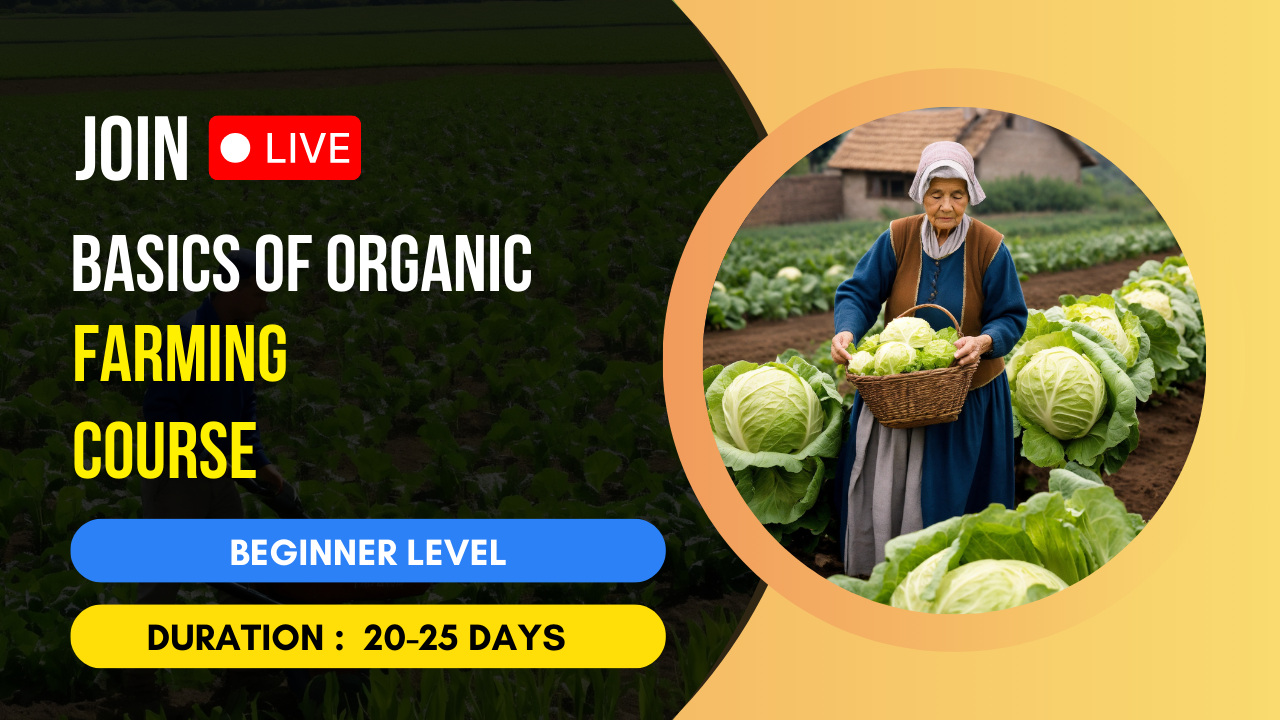
Course Description
The Basics of Organic Farming course is designed to introduce learners to eco-friendly methods of agriculture that avoid harmful chemicals and focus on natural farming techniques. Whether you are a beginner farmer, a student, or someone passionate about sustainable living, this course will give you practical knowledge to start and manage organic farming successfully.
You will explore soil management, composting, crop rotation, natural pest control, and the use of bio-fertilizers. The course also covers certification processes, market opportunities, and how organic farming contributes to environmental health and food security.
What you'll learn in this course
-
Understand the principles and benefits of organic farming.
-
Learn about soil health management and organic manures.
-
Gain knowledge of composting, vermicomposting, and bio-fertilizers.
-
Explore crop rotation, intercropping, and integrated farming practices.
-
Study natural pest and disease management techniques.
-
Understand organic certification standards and marketing opportunities.
-
Build confidence to start your own organic farming project or expand existing practices.
Requirements
-
No prior farming experience required (beginner-friendly).
-
Basic understanding of agriculture or biology is helpful.
-
Interest in sustainable farming and eco-friendly practices.
-
Access to farmland, garden space, or willingness to practice techniques on a small scale.
Curriculum
- 10 Lessons
- 90 mins.
- Understanding the concept and principles of organic farming
- Importance of organic farming in sustainable agriculture
- Difference between organic and conventional farming
- Certification standards and global recognition of organic produce
- Role of healthy soil in organic farming
- Composting methods and benefits of organic manure
- Green manuring and crop residues management
- Use of biofertilizers for improving soil fertility
- Selection of seeds and importance of indigenous varieties
- Crop rotation and intercropping systems
- Weed management through mulching and cultural practices
- Role of organic inputs in enhancing productivity
- Understanding natural pest and disease cycles
- Biological control methods using beneficial insects
- Preparation and use of botanical pesticides
- Integrated pest management in organic farming
- Importance of efficient water management
- Rainwater harvesting and irrigation methods
- Soil moisture conservation techniques
- Renewable energy use in organic farming practices
- Importance of livestock in organic farming
- Organic feed and fodder management
- Health care and disease prevention using natural remedies
- Integration of animals with crop farming systems
- Harvesting and storage practices for organic produce
- Cleaning, grading, and packaging methods
- Processing and value addition opportunities
- Ensuring quality and safety in organic products
- Understanding organic certification process and agencies
- Branding and labeling of organic produce
- Local, national, and export market opportunities
- Challenges and strategies in organic marketing
- Role of organic farming in improving farmer livelihoods
- Women and youth empowerment through organic enterprises
- Community-based organic farming initiatives
- Case studies of successful organic farmers
- Trends and innovations in organic agriculture
- Role of technology in organic farming practices
- Climate change and organic farming adaptation
- Building a sustainable future through organic farming
Your Instructor

Skill Pathshala Team
Advanced Educator
Skill Pathshala is an online learning community with thousands of classes for creative and curious people, on topics including illustration, design, programming, photography, video, freelancing, and more. On Skill Pathshala, members come together to find inspiration and take the next step in their creative journey.
- Duration span 90 mins.
- Lectures0
- LanguageHindi
- Skill levelBeginner
Secure Payment:
