
Improving Crop Nutrition Practices
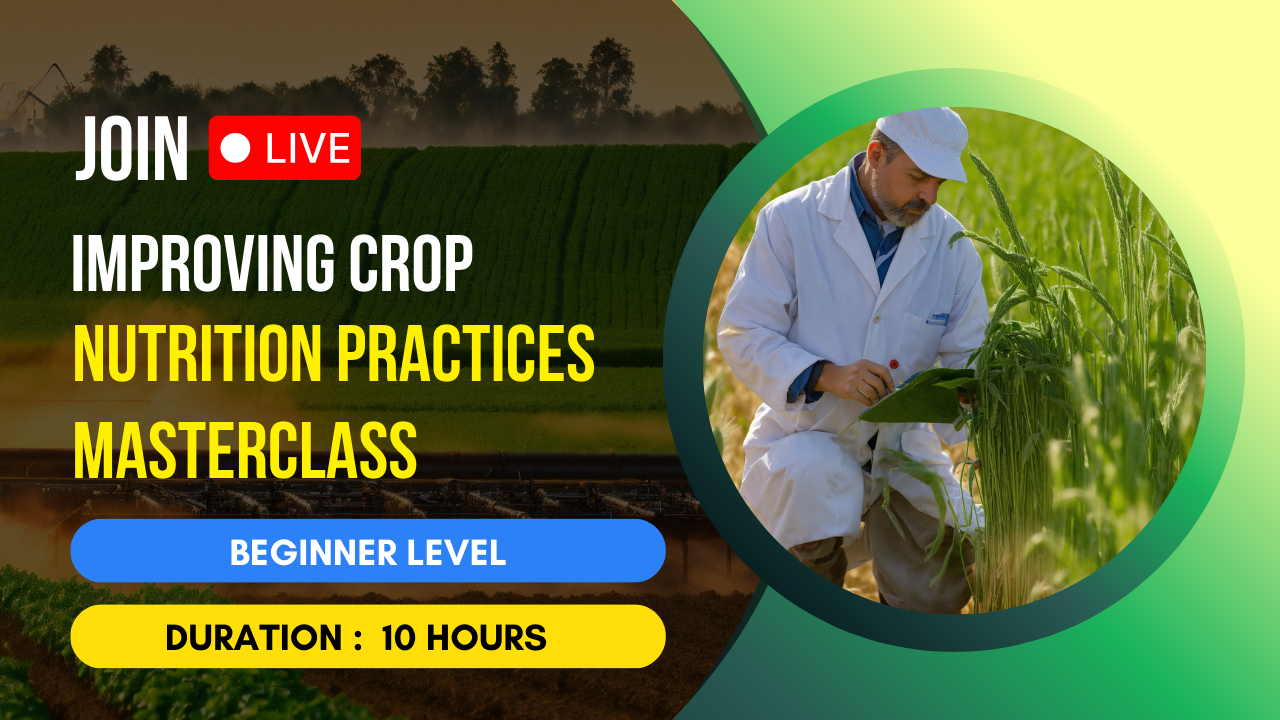
The Improving Crop Nutrition Practices course focuses on the essential principles and techniques of plant nutrition to enhance crop productivity and soil sustainability. Participants will explore how balanced nutrient management plays a key role in improving yields, reducing input costs, and protecting the environment.
-
 Skill Pathshala Team
 - 20 enrolled students
Course Description
The Improving Crop Nutrition Practices course focuses on the essential principles and techniques of plant nutrition to enhance crop productivity and soil sustainability. Participants will explore how balanced nutrient management plays a key role in improving yields, reducing input costs, and protecting the environment.
What you'll learn in this course
-
Basics of soil fertility and plant nutrient requirements.
-
Identifying nutrient deficiencies and their symptoms in crops.
-
Efficient use of organic and inorganic fertilizers.
-
Integrated nutrient management for higher productivity.
-
Best practices in fertilizer application methods and timing.
-
Role of micronutrients, biofertilizers, and sustainable practices.
-
Modern tools and technologies for precision nutrient management.
Requirements
-
Basic understanding of agriculture and farming practices (preferred, not mandatory).
-
Interest in crop management, soil health, and sustainable farming.
-
Access to a smartphone/computer and internet connection.
-
Willingness to apply learning through practical field-based exercises.
Curriculum
- 10 Lessons
- 600 mins.
- Understanding the role of nutrients in plant growth and development
- Essential nutrients: macro, secondary, and micro elements
- Signs of nutrient deficiency and toxicity in crops
- The link between soil health and crop nutrition
- Soil types, properties, and their impact on crop nutrition
- Methods of soil testing and interpreting reports
- Organic matter and its contribution to nutrient availability
- Strategies for maintaining soil fertility sustainably
- Types of fertilizers: organic, inorganic, and biofertilizers
- Correct methods of fertilizer application for maximum efficiency
- Timing and dosage: how to feed crops at the right stage
- Reducing fertilizer loss through better practices
- Concept and importance of INM for long-term soil health
- Combining chemical, organic, and biological sources of nutrients
- Role of crop residues, compost, and green manures
- Practical examples of successful INM in farming
- Nutrient requirements of cereals, pulses, and oilseeds
- Special nutrition techniques for fruits and vegetables
- Role of micronutrients in improving crop yield and quality
- Case studies of crop nutrition success stories
- Importance of water in nutrient uptake and distribution
- Efficient irrigation methods to support crop nutrition
- Fertigation: combining water and fertilizers for better results
- Managing salinity and water quality issues in nutrition
- Precision farming tools for nutrient application
- Role of sensors, drones, and GIS in crop nutrition monitoring
- Biofortification and improving nutritional quality of crops
- Nanotechnology and innovative inputs in crop nutrition
- Reducing nutrient losses through eco-friendly practices
- Role of cover crops, crop rotation, and intercropping in nutrition
- Climate change impact on soil fertility and plant nutrition
- Building resilient farming systems with sustainable practices
- Cost-benefit analysis of improved nutrition practices
- Access to fertilizers, inputs, and extension services for farmers
- Role of government policies and subsidy programs
- Empowering farmers with knowledge for better decision-making
- Global trends in crop nutrition and food security
- Innovations in plant breeding for nutrient efficiency
- Farmer-led approaches and community-based nutrition programs
- Building long-term strategies for healthier soils and crops
Your Instructor
Skill Pathshala Team
Advanced Educator
Skill Pathshala is an online learning community with thousands of classes for creative and curious people, on topics including illustration, design, programming, photography, video, freelancing, and more. On Skill Pathshala, members come together to find inspiration and take the next step in their creative journey.
- Duration span 600 mins.
- Lectures0
- LanguageHindi
- Skill levelBeginner
Secure Payment:
